Meet Katie Steinharter
Artist Q&A
Can you tell us a little about your artistic background and how you became involved in the Recovery Cards Project?
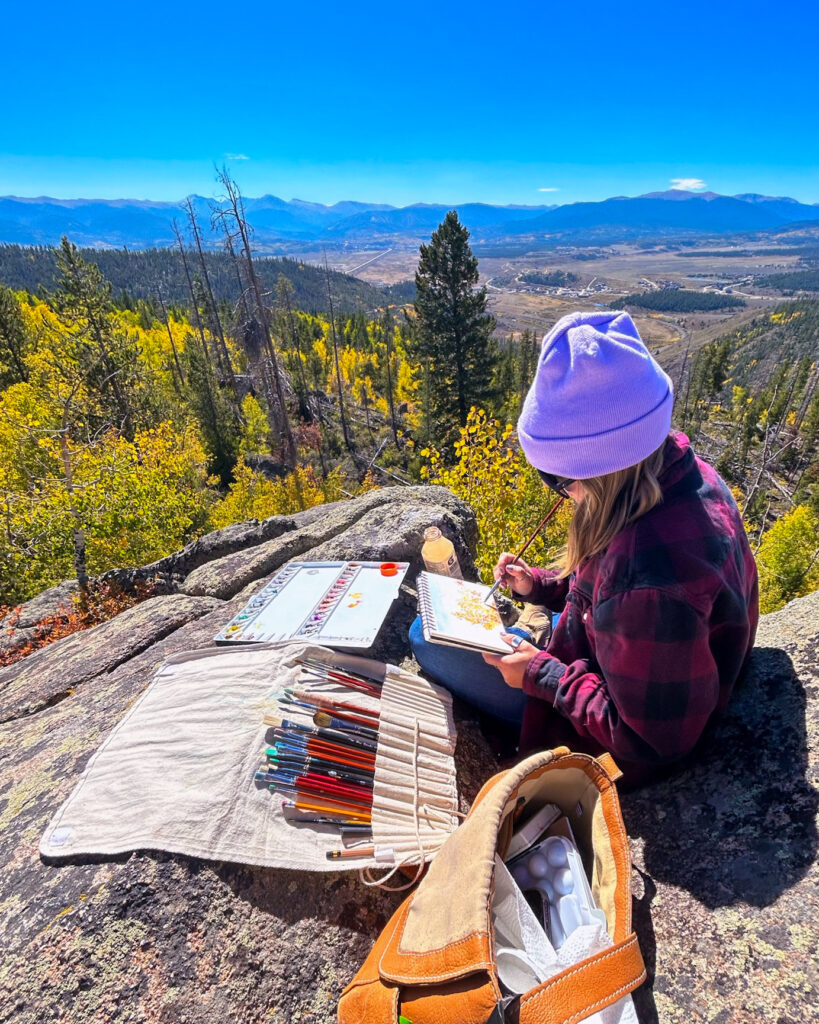
My grandfather taught me to paint when I was young, from his above-the-garage studio outside his house in northern Maine. Art became a way for me to bond with my family, interpret the world, express myself, and connect to a larger community. I later studied studio art in college and, years later, saw a post from an old college friend on her social media looking for artists for this project and the cause really resonated so I took a chance and applied.
Do you have a personal connection to substance use disorder or mental health struggles?
Yes, I think most people do, but feel ashamed talking about it. My best friend in high school was suicidal, and I didn’t quite understand it all at the time, but I did know that I loved her for who she was and wanted to be there for her and remind her how incredible she was and how confusing it was that she would ever not be able to see that herself. On an even more personal note, in college, I was diagnosed with Type 1 Diabetes and my roommates at the time were very unsupportive. I sank into a low depression and experienced triggering moments, anxiety, and confusion throughout the next decade while trying to figure out who I was and how the illness affected me. I ended up in a toxic adult relationship that led me to some of my lowest moments of self-worth. Moving to the mountains after, I began to rediscover art, yoga, and self-love to lead toward a path of healing and happiness.
What inspired the design and message of your card?
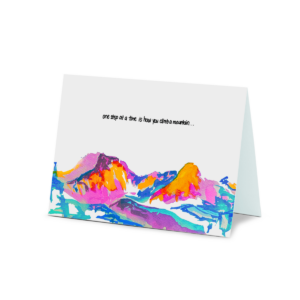
When I moved to the mountains alone, I felt both scared & empowered. I woke up in my new, safe little home and saw the Continental Divide out my window each morning and it would steady me. The mountains started making me feel small within a big world, hopeful of more out there, and became a reminder that I was both safe and strong and in control of my own life. I hope others can also feel that.
What do you hope someone in recovery feels when they receive your card?
I hope someone who receives my card feels hopefulness, joy, a shining light of possibility, steadiness, strength, kindness, and a connection to something greater and more beautiful that they deserve to experience.
How has participating in this project influenced your perspective on recovery or community support?
It has been incredible to see how large the community is, how many people respond to my art or words, and how many people are looking for a way to describe what feels so big or lonely sometimes. Many friends of mine have overcome incredible things and are so touched to have an ally in the community.
Why do you think greeting cards are a powerful tool for supporting people in recovery and community?
I have always loved cards because I grew up overseas so it is how I stayed in touch with my grandparents and friends. I collected postcards, with a stack kept in a shoebox that I would look at over and over. I practiced designing cards, and I told my sister I wanted to design for Hallmark – luckily I’ve done even better and make my own cards now. I saw cards as mementos of moments in life, ways to connect with those I loved and to relive that love over and over. For people in recovery, a card is a way to be there without forcing a conversation, a way to preserve love for a moment that can be saved and come back to.
How do you see art playing a role in reducing stigma around addiction and recovery?
Artists have always used creativity to spark conversation, interpret or challenge culture, and create sub-communities. Hopefully, a piece of art can help open a conversation instead of continuing the trend of stigma or silence.
Were there any challenges in balancing personal creativity with the sensitive themes of recovery?
Instead of focusing on the recovery, I created something I would have liked to receive on a card during a hard time—color, nature, hope, and real words from real people.
Check out more of Katie’s work on her Instagram @ksteinhartist
Cards by Katie Steinharter